Software for corporate and drop-off caterers
Your problem is the opposite of a wedding caterer's. Each job is small, the margin is thin, and there are forty of them a week. Anything that takes ten minutes per job takes your whole week.
Volume is the constraint, not value
A $400 lunch drop cannot carry an hour of admin. It has to be quoted, scheduled, prepped, delivered and invoiced in minutes, or the job is not worth having.
That means the repeat path has to be nearly free: the same client, ordering the same thing, for a different Tuesday.
Where the time actually goes
Quoting. The enquiry is captured with headcount, date and dietary needs already on it, and the menu is drawn from what you have quoted before.
Shopping. Ten drops in a week share most of their ingredients. The list combines across every event in the window, so butter needed by six jobs is one line.
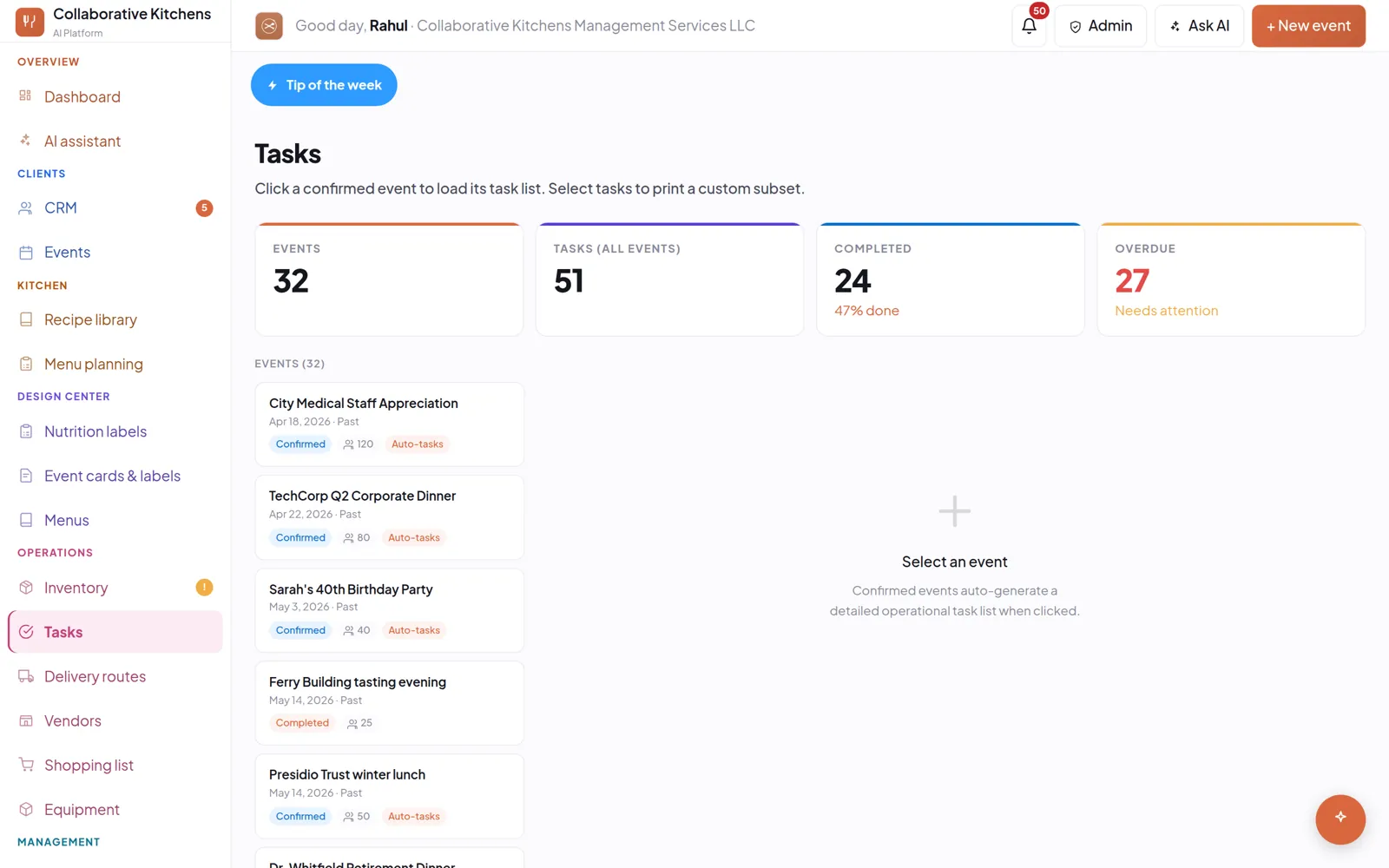
Delivery. Each job raises its own prep and delivery tasks, worked back from the drop time rather than forwards from today.
Invoicing. The invoice is drafted when the event is confirmed, not written on Friday night for the whole week.
Honest about the delivery run
There is no route optimisation. Delivery addresses and times are on the events; the order you drive them in is yours to decide. It is not built and this page will not pretend it is.
Questions people ask
Can I see the shopping for the whole week in one list?
Yes. Ask for the week and ingredients are combined across every event in it, netted against stock, and split by supplier when you order.
Does it plan my delivery route?
No. Addresses and times live on the events, but route optimisation is not built, and nothing here claims it is.
Ten minutes gets a real event in — your menu, your prices, a quote you could send. The 14-day trial takes no credit card.